Showing posts with label journeys. Show all posts

Thursday, 7 January 2010

to the hills part 2

passing place at Liathach
 
 Moruisg summit plateau after a slog breaking trail in thigh deep snow
 
shinty field, Achintraid, Kishorn
 
 leaving Kishorn and the Bealach na Ba after dawn.

Tuesday, 24 November 2009

Crusoe & Friday


Lesley Punton "Crusoe & Friday : Robinson Crusoe"
2009, from the Lightships series, A6 B&W postcards

Monday, 23 November 2009

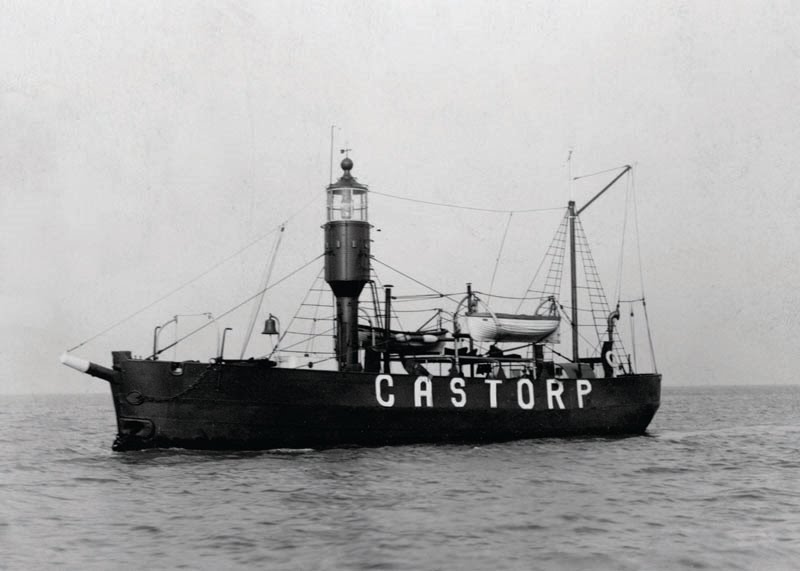
Castorp


Lesley Punton "Castorp : The Magic Mountain"
2009, from the Lightships series, A6 B&W postcard

Sunday, 22 November 2009

Marlow & Kurtz


Lesley Punton "Marlow & Kurtz : Heart of Darkness"
2009, from the Lightships series, A6 duotone postcards

Wednesday, 4 November 2009

a 5 day journey

Robert Macfarlane again, this time every night this week on Radio 3 in a series entitled the essay - a 5 day journey "walking the length of the South Downs, exploring its chalk path and its ghosts".

The BBC's blurb is thus:

Haunting
Walking the Hampshire miles of the South Downs, in monsoon rain and sunshine, Robert reflects on the relationship between paths and stories, and how old paths were imagined in 19th-and early 20th-century England as ghostly spaces of time-warp and spectres. He considers how paths might be thought of as sculptures, a kind of democratic art form; and he meets a man who has been on the road for seven years, since the death of his wife.


Marking
Walking the Downs on the Sussex-Hampshire border, Robert explores poet Edward Thomas' love affair with paths and tracks. For 20 years, Thomas walked what he called 'the long white roads' and 'frail tracks' of England's chalk country. Then in 1916, he enlisted and was sent as an officer to the chalk landscape of Arras in Northern France, with its far more dangerous paths. He was killed on Easter Monday, 1917.


Singing
Crossing from Bramber Bank to Kingston Down, in the company of writer Rod Mengham, Robert considers the Australian Aborigine concept of the songline, whereby walking, wayfaring, singing and folk memory become aligned. He explores some of the ways that landscapes can be sung into being - or 'en-chanted' - and embarrasses a number of passers-by with his own performances.

Flying
The Downs have often prompted dreams of flight. Reaching the Cuckmere Valley and the Seven Sisters, Robert re-imagines the life of artist Eric Ravilious, who was fascinated by the 'pure design' of the South Downs - their paths, ridges and light. Ravilious's passion for aerial landscapes eventually led him northwards, to Norway and Iceland. He disappeared off the coast of Iceland in September 1942 while on a rescue flight.  


Collecting
Walking the final miles of the South Downs with artist Chris Drury, Robert explores the sometimes eerie relationship between walking, collecting and creation. Vladimir Nabokov, Iris Murdoch, Hugh MacDiarmid, Bruce Chatwin and Drury's own land-art sculptures feature, as does the life and death of Virginia Woolf, who drowned herself in the Sussex Ouse having slipped a single, heavy flint into her pocket.

Thursday, 17 September 2009

Topographies and Tales

This is me in a still from a video installation shown at Render, in Ontario, Canada recently...


My friend Alice has finished a film entitled Topographies and Tales she's been working on for a few years now, filming in Canada and Scotland.

The Proboscis website says:

A film by Alice Angus and Joyce Majiski using music, oral recordings, drawing, animation and storytelling to playfully unearth local and personal stories, memories and myths against a picture of how concepts of space and environment are shaped by ideas of belonging and home. A personal exploration of the intimate way people form relationships with their environments, Topographies and Tales takes a journey through the myths and perceptions the filmmakers encountered on their travels in the west of Scotland and the Yukon.

Monday, 6 July 2009

Summer solstice bivvy on the summit of Schiehallion

As a summer solstice walk on the 21st June, Jim & I decided to climb Schiehallion with a view to bivvying on the summit, making a long exposure pinhole photograph on 5x4 film recording the duration of the night (there were around five hours of darkness). We set off and got to the top around 10pm just as the light was beginning to fade, but still having plenty of time to set up "camp" on the only sheltered area of the boulder field, and figure out where to make the images. In the end, we opted to have one camera point roughly towards north, and another in a southerly direction. There was an extremely strong cold wind blowing, so the cameras were supported by little piles of stones - camera cairns!

The wooden pinhole camera is in the bottom left hand corner of this image.


...and this was a cardboard camera which we nestled in amongst the summit cairn itself. The perspective and distortion of the image is rather misleading.


We'd rather assumed we'd have the summit to ourselves, but clearly others had also thought of walking on the solstice too so at 1am were awoken by two walkers passing close by along the ridge. They found a spot maybe 50m away from us, but in the cold wind, and without sleeping bags, froze and left as soon as the dawn came.


Schiehallion's isolated position and regular shape led it to be selected by Charles Mason for a ground-breaking experiment to estimate the mass of the earth in 1774. The deflection of a pendulum by the mass of the mountain provided an estimate of the mean density of the Earth, from which its mass and a value for Newton's Gravitational constant G could be deduced. Mason turned down a commission to carry out the work and it was instead coordinated by Astronomer Royal, Nevil Maskelyne. He was assisted in the task by mathematician Charles Hutton, who devised a graphical system to represent large volumes of surveyed heights, later known as contour lines, which we now all use on our OS maps.

Ours was another act of measurement, but this time of light and duration.

Image made from the pinhole camera facing North


Image made from the pinhole camera facing South


We seem to be making a bit of a regular thing of walking at the pivotal points of the years cycles of light and dark.